Overlaminating Perforated Window Film
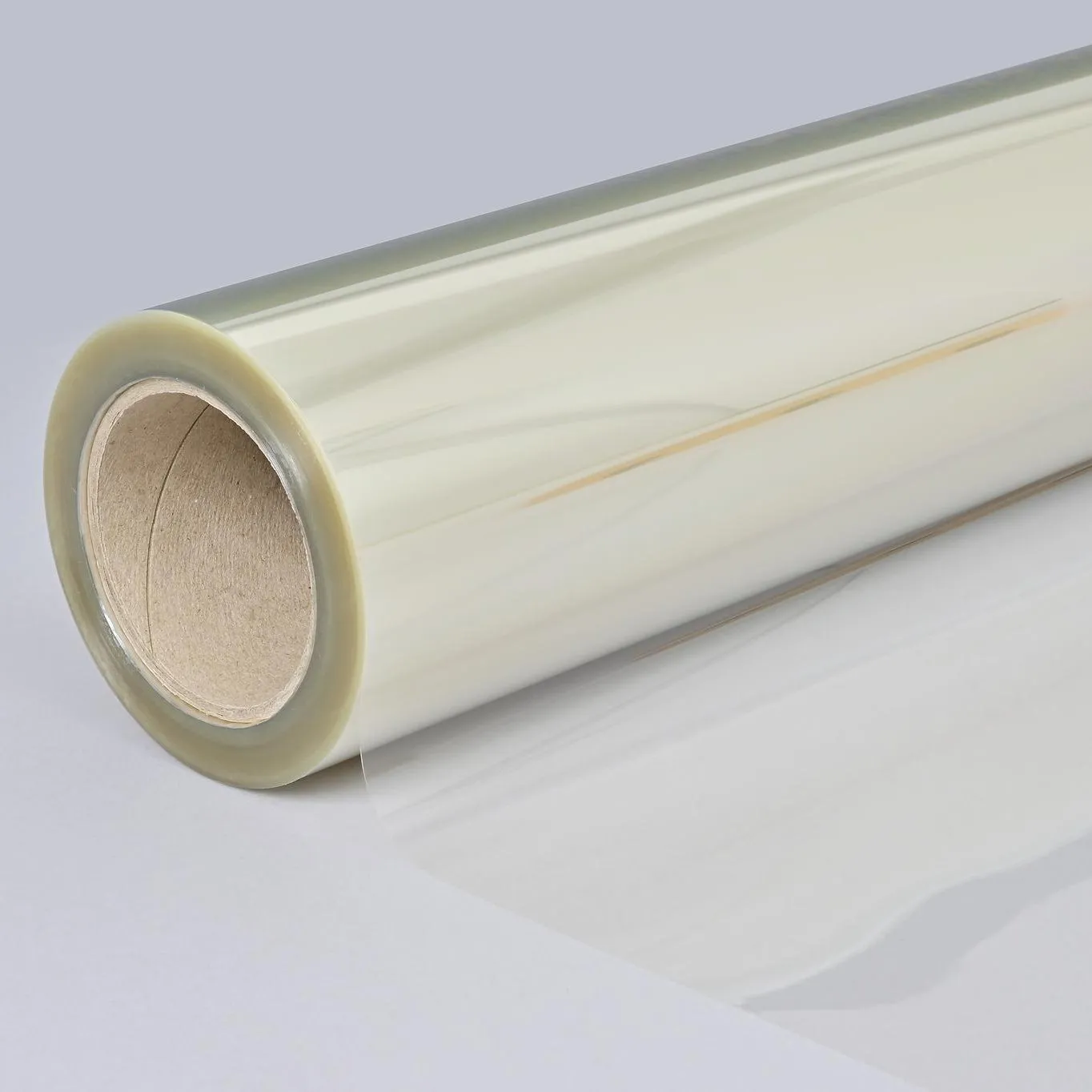
Contra Vision is the world’s most experienced developer and manufacturer of perforated films, and home to the inventors of many of the products, technologies and applications in the field of one-way-vision graphics used today by the visual communications and allied industries. Our specialised application knowledge will help you to decide whether to laminate printed and unprinted perf, what specialised laminating film to use and why, and what considerations you need to observe while laminating and subsequently applying your perforated graphics to windows and other glazed surfaces.
On this page we cover the following points:

1. Why Laminate Printed Perforated Vinyl Graphics?
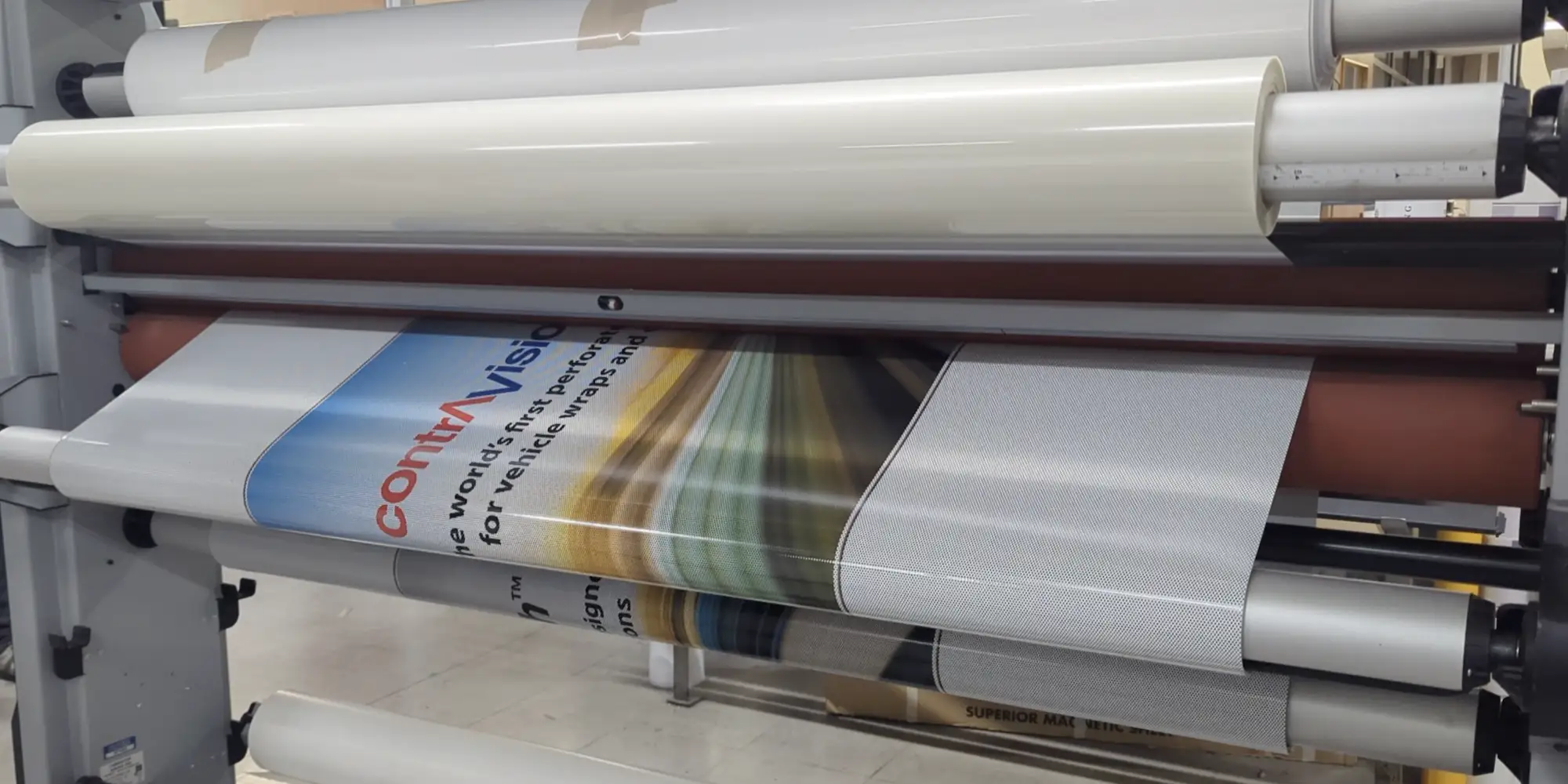
Laminating, or ‘overlaminating,’ as it’s popularly known, is an optional production step that print producers perform, and that is required for most of the output that print businesses supply to their customers and markets. Laminating graphics produced using perforated window films, or ‘perf,’ for one-way vision graphics is optional, but often required, and it’s regarded as essential in many applications.
Perforated films should only be laminated with specialist laminates which are manufactured or proven for use with perforated materials. Special laminating techniques must be used too because of the construction of the perforated film, the requirement of maintaining a clear view through the applied laminated one-way vision graphic, and other physical effects which arise in the whole laminated see-through graphic before and after it’s installed.
Applying a compatible laminating film, often referred to as ‘lam,’ to printed perforated graphics benefits Project Lifetime Value specifically design, production, installation, and in-application performance in many ways that including:
- Physical Protection
The applied laminating film protects the underlying printed perforated film from the detrimental effects of abrasion and physical impact that might otherwise damage the print, or the perforated film itself, impairing the performance of the print or causing its failure. Sources of abrasion can include cleaning with the wrong materials and contact damage which may result from strikes with stones, branches, and road debris among other such things. - UV Protection
Laminating films help protect ink and underlaying film layers by reducing the lifetime-limiting effects of often intense UV light that the applied graphics will encounter in exterior daylight conditions. UV light is known to accelerate ink fading and cracking and can degrade many materials including perforated films. Laminating films help extend the life of applied printed perforated films in such exterior conditions by filtering UV light. - Accumulated Dirt Protection
Laminating effectively caps each and every perforation hole in a perforated graphic and this in turn prevents any dirt in the application environment from finding its way into the perforation holes blocking, or partially blocking them. Even partially blocked holes will impair the view through from the reverse of the applied graphic and the degrade the apparent quality of the image perceived from the printed side. Laminates offer total protection against blocked perorations and make accumulated dirt much easier to remove from applied one-way vision graphics without causing damage. - Rain Protection
Laminated printed graphics maintain a better view through from the see-through side of the graphic in rainy or very humid conditions than unlaminated graphics in the same situation. Laminates prevent water from accumulating and naturally forming lens-like droplets (meniscus) inside perforations. These droplets would otherwise distort the view through an unlaminated graphic limiting its see-through performance. Accumulated water can be easily removed from a laminated perforated graphic or, if left, it will dry naturally and any residue can be easily wiped off. - Better Image Performance
Laminated graphics modify reflected light off the printed image’s surface by concentrating reflections that otherwise ‘scatter’ and limit contrast. The beneficial result is described as ‘pop.’ Colours will look more intense and apparent resolution more crisp. Unlaminated perforated graphics, when compared directly to laminated ones, are known to look less impactful in certain commonly encountered lighting conditions. - Easier Handling
Laminated graphics are said by those skilled in applying them to be easier and less error-prone to handle than unlaminated ones. This is an important consideration, particularly when handling graphics in difficult conditions, for example at height or when it’s windy. A laminate imparts an additional component of ‘stiffness’ that helps reduce graphics’ tendencies to fold or crease and allows the installer to work faster and with greater confidence. - Faster and Easier Removal
Laminating perforated films improves their structural integrity and this can mean that laminated perforated graphics are easier and more reliable to remove than those which are unlaminated. Unlaminated films may tear if the strength of the perforated film is exceed by the forces needed to remove it. Laminated films are less likely to tear in such situations or when being removed quickly or without care. - Extended Product Life
All applied graphics have an expected application life. The end of the useful application life may be determined by the durability of the graphics’ messages or the durability of the perforated material. Whatever the situation may be, a laminated graphic will retain optimal performance and image impact for longer than a graphic exposed to the environment without the protection of a laminate. - The need to laminate in summary…
While it’s by no means mandatory that perforated graphics are laminated, lamination has its appeal regardless of whether the application is long or short term. It benefits message presentation, application and removal, and it protects against unplanned failures due to image or film degradation. Laminated perforated graphics look better, last longer, and are easier to remove in one piece for easy handling and proper disposal. - Liquid lamination or ‘overcoat’ as it is referred to on some printers is another way to protect the ink on the graphic, it will not protect the perforations though and may need extra attention when printing on our film. If you have any questions regarding this then please get in touch
2. What’s Special about Laminating Films for Perforated Graphics?
Laminating films for application to printed perforated films are designed, formulated and manufactured with a range of special features that are required to ensure that the laminated perforated film performs in the see-through applications for which it’s used and designed. These include:
- See-Through Performance
While most laminating films look clear, only those expressly produced or recommended for application to perf are clear in ‘air-clear’ applications. Once applied to a perforated graphic, part of the laminating film is in adhesive contact with the printed graphic, and part is suspended or ‘bridged’ over the top of the perforated film’s holes – literally, suspended ‘in-air.’ From the see-through side, the observer looks through the laminating film and through its adhesive, so it’s critical that both allow a clear view with haze and unwanted distortions limited to the extent technology and product design allows. - The Film Layer
Properly formulated laminating films for perf exhibit minimal air-clear distortion. The film is engineered to be as flat as possible on each of its two sides so that its doesn’t optically distort the view through. The film is also formulated to exhibit minimal internal distortion which can otherwise cause a water-like effect sometimes known as ’swimming’ which spoils the view through. Laminating films for perf are also formulated to exhibit minimal ‘haze.’ Haze is simply anything which can colour or impair the view through by limiting apparent contrast or light level. - The Adhesive Layer
The adhesive on properly designed and formulated films for laminating perforated window films is ‘water-white’ or, in other words, as near to completely clear as technology allows. The adhesive behaves like an optical film and so it’s critical that once it is exposed to air when the liner is removed during laminating, that it remains flat, and doesn’t sag or get squashed into the perforation holes. If it does, the view through will be spoiled. - The Liner
The liner used on laminating films for perf has to impart a very flat, polished condition on the adhesive it protects. Liners used on ordinary graphics laminates leave a micro texture that seriously impairs the view through and spoils the application. The liner used on laminates for perf ensures that the adhesive remains flat and as near to optically clear as the technology allows. - Mechanical Matching
Laminating films for perforated window graphics are engineered to exhibit beneficial mechanical properties that support reliable application. When used as specified and applied correctly, the laminating film will exert minimal stresses due to shrinkage differential or application stresses introduced by application or laminating conditions.
Static Control During Laminating
PET liners and laminate films can generate static during unwinding and liner separation, particularly in dry environments. To help reduce static build-up during laminating, grounded copper anti-static tinsel can be positioned near nip entry and liner separation points. For best performance, ensure the tinsel is properly earthed and lightly contacts the media where possible. Maintaining workshop humidity around 40–45% RH can also significantly reduce static issues.
3. Which Laminating Film to Use?
Laminating films for perf are available in two material types from Contra Vision:
- Cast Vinyl
Cast vinyl laminate for perf deliver the best see-through performance, stability, durability and overall performance. We recommend this version primarily for our Campaign and Performance range of perforated window films. - Polyester
Polyester laminating films for perforated graphics are used in special applications where optimal see-through performance is needed and are only suitable for smaller graphics in less exposed conditions. We recommend this version primarily for our Advance range of perforated window films
4. How to Laminate
In the following guide you will find all the details you need to complete a successful laminated window graphic. Watch the video below for an in-depth tutorial on how to overlaminate perf or click here to download a PDF version: How to Overlaminate Contra Vision Perforated Window Film. Thanks for reading and if you still have any questions then please get in touch.
Click on a product name for full details